Let’s be honest — your garbage disposal doesn’t get much appreciation until it stops working. One day it’s happily chomping through food scraps, and the next it’s making a sound like a bag of marbles in a blender, leaking under the sink, or just… nothing. Total silence. That’s when panic sets in.
The good news? You’re not alone. Garbage disposal problems are one of the most common kitchen plumbing issues homeowners face. The even better news is that a qualified plumber can typically diagnose, repair, or replace your unit quickly — often in a single visit. But before you grab the phone, let’s walk through everything you need to know: the warning signs, the repair vs. replace debate, what the installation process looks like, and why calling a professional plumber is almost always the smarter move.
The Warning Signs Your Garbage Disposal Is Crying for Help
Your disposal will usually give you clues before it completely gives up. Here are the most common signs that something’s wrong:
It won’t turn on at all. If pressing the power button produces zero response — no hum, no sound, nothing — it could be a tripped reset button, a blown fuse, or a failed motor. Always check the reset button on the bottom of the unit first (it’s a small red or black button). If pressing it doesn’t fix things, it’s time to call a plumber.
It hums but doesn’t grind. This is usually a sign that the motor is running but the grinding plate is jammed. Sometimes a hex wrench inserted into the bottom of the unit can manually free it up. If that doesn’t work, the flywheel or grinding components may be damaged.
It’s leaking. Leaks can come from several spots — the sink flange at the top, the drain connection on the side, or the bottom of the unit itself. A bottom leak is often the worst sign, as it usually means the internal seals have failed. At that point, repair rarely makes sense.
It smells terrible even after cleaning. Persistent odors despite regular cleaning can indicate food buildup in hard-to-reach internal areas, or a crack in the unit that’s trapping debris.
It drains slowly or not at all. A slow drain from your disposal could mean a clog in the drain line, a blockage inside the unit, or a problem with your overall kitchen drain system. A plumber can identify and clear the issue quickly.
It makes alarming noises. Grinding, rattling, or clanking sounds usually mean something is caught in the grinding chamber — like a piece of silverware or a bottle cap — or that internal components are worn out and grinding against each other.
Should You Repair It or Replace It?
This is the million-dollar question (well, the several-hundred-dollar question). Here’s a simple way to think about it:
Repair usually makes sense when:
- The unit is less than 4–5 years old
- The problem is clearly a jam, a worn seal, or a drain clog
- The repair cost is significantly less than the cost of a new unit
- The motor is still running strong
Replacement usually makes sense when:
- The unit is 8–10+ years old (the typical lifespan of a disposal)
- There are multiple problems happening at once
- The motor has failed or the unit leaks from the bottom
- Repair costs would exceed 50% of what a new unit costs
- You want to upgrade to a quieter, more powerful, or more energy-efficient model
A good plumber will give you an honest assessment. They’re not going to push you toward an expensive replacement if a simple fix will do the job — a reputable plumber’s business runs on trust and referrals, after all.
Why You Should Hire a Plumber (Not DIY)
YouTube makes everything look easy, right? The truth is, garbage disposal work involves more than just swapping one unit for another. Here’s why professional installation matters:
Electrical and plumbing connections. Disposals connect to both your home’s electrical system and your drain plumbing. Improper wiring can create serious safety hazards, and a poorly seated drain connection can lead to leaks inside your cabinet — damage that builds up unnoticed and can result in mold or rot.
Proper sizing and compatibility. Not every disposal fits every sink. Plumbers know how to match the right horsepower and mounting system to your specific sink configuration. They’ll also make sure your drain line and P-trap can handle the new unit.
Warranty protection. Many disposal manufacturers require professional installation to maintain the warranty. A DIY job could void your coverage before the unit even gets broken in.
Code compliance. Depending on where you live, plumbing work may require permits and must meet local building codes. A licensed plumber handles all of that for you.
Speed and confidence. An experienced plumber can complete a standard disposal installation in under an hour. No frustrated trips to the hardware store, no second-guessing whether the drain seal is tight enough, no wondering if that slight hum means something is wrong.
What to Expect During a Garbage Disposal Service Call
Knowing what happens during a plumber’s visit can help you feel prepared and confident. Here’s a typical breakdown:
Diagnosis first. A plumber will start by examining your current unit, testing the electrical connection, checking for leaks, and running the disposal to assess its performance. This helps them give you an accurate recommendation.
Repair or replacement discussion. Based on the diagnosis, they’ll walk you through your options, including the cost difference between repairing and replacing, and recommend specific models if a new unit is needed.
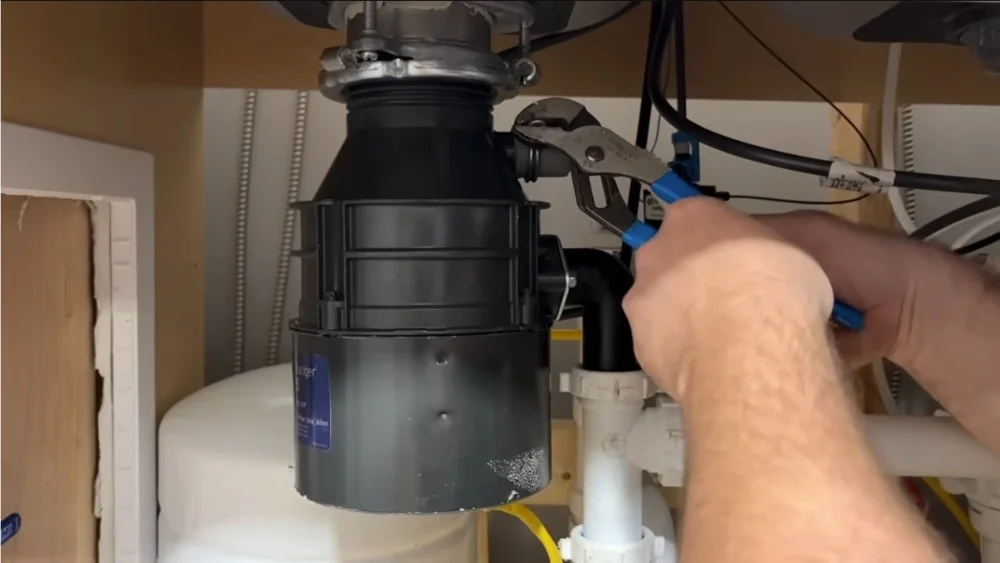
The work itself. For a repair, the plumber will address the specific issue — clearing a jam, replacing a seal, clearing a drain line, or fixing the mounting. For a replacement, they’ll disconnect the old unit, install the new one, connect the drain line, verify the electrical connection, and test everything before calling it done.
Cleanup. A good plumber leaves the work area as clean as they found it. The old unit gets removed and disposed of properly.
Walk-through with you. Before leaving, they’ll show you how the new unit works, answer any questions, and let you know about any care tips or things to avoid putting down the disposal.
Choosing the Right Garbage Disposal
If you’re getting a replacement, here are a few things to consider:
Horsepower matters. For a typical household, a ½ HP motor handles everyday food waste just fine. If your household generates a lot of food scraps or you cook frequently, consider ¾ HP or 1 HP for more grinding power and less jamming.
Sound insulation. Premium models feature sound-dampening insulation that makes them noticeably quieter. If your kitchen is open to a living or dining area, it’s worth the upgrade.
Stainless steel grinding components. These resist corrosion and last longer than non-stainless alternatives.
Continuous feed vs. batch feed. Most disposals are continuous feed — you flip a switch and feed waste while it runs. Batch feed models only run when a special lid is inserted, which some people prefer for safety (especially in homes with young children).
Your Morgan plumber can walk you through the best options at different price points and help you choose a unit that fits both your needs and your budget.
How to Keep Your Garbage Disposal Running Longer
Once your disposal is repaired or replaced, a little maintenance goes a long way:
Run cold water before, during, and after using the disposal. Cold water solidifies fats so they grind up instead of coating the unit’s interior. Keep fibrous foods like celery strings, potato peels, artichokes, and banana peels out of the disposal — they can wrap around the grinder and cause jams. Avoid putting grease, oil, coffee grounds in large quantities, or anything that expands in water (like pasta or rice) down the drain. Clean the disposal monthly by grinding ice cubes with a little rock salt, or by pouring in a mixture of baking soda and vinegar followed by hot water. And never, ever put your hand inside the disposal — even when the power is off.
Northern Virginia Homeowners: Morgan Plumbing LC Has You Covered
If you’re located in Northern Virginia and your garbage disposal is giving you trouble, you don’t have to search far for reliable help. Morgan Plumbing LC is a trusted, experienced plumbing company serving homeowners throughout the Northern Virginia area — and they know their way around a garbage disposal inside and out.
Whether you’re dealing with a stubborn jam, a mystery leak under the sink, or a unit that’s simply reached the end of its life, the team at Morgan Plumbing LC will give you an honest diagnosis and get the job done right the first time. No guesswork, no overselling — just straightforward, professional plumbing service from people who genuinely care about your home.
Ready to schedule a service call? Contact Morgan Plumbing LC today and get your kitchen back to running smoothly. Northern Virginia homeowners trust them for a reason — and after one visit, you will too.
Ready to Get Your Kitchen Back to Normal?
A broken garbage disposal might seem like a small inconvenience, but it can quickly disrupt your whole kitchen routine — and if there’s a leak involved, it can lead to bigger (and more expensive) problems down the line. Whether you need a quick repair or a full replacement installation, calling Morgan Plumbing LC, a licensed plumber, is the fastest, safest, and most reliable way to get things back to working order.
Don’t wait until the problem gets worse. Reach out to Morgan Plumbing LC, your trusted local plumber, describe what you’re hearing (or not hearing) from your disposal, and get your kitchen sink back in action. You might be surprised at how fast and affordable the fix really is.
