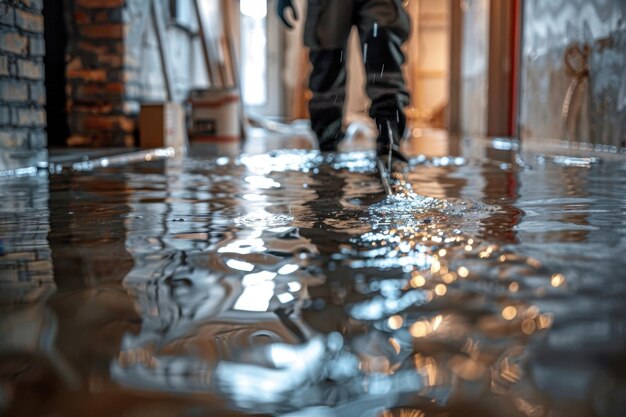
If you’ve ever walked into your basement after a heavy rainstorm and found a puddle of standing water, you already understand the sinking feeling that comes with it. Water damage is one of the most expensive — and most preventable — problems a homeowner in Northern Virginia can face. And one of the most effective tools for stopping it before it starts? A sump pump.
Whether you’re a first-time homeowner in Fairfax County, a longtime resident in Loudoun or Prince William County, or you’re just starting to notice some moisture issues in your crawl space or basement — this guide is for you. We’re going to break down exactly what a sump pump does, why it matters in our region, and help you figure out whether your home needs one.
Let’s dig in.
So, What Exactly Is a Sump Pump?
A sump pump is a small but mighty device that sits in a pit — called a sump pit or sump basin — typically dug at the lowest point of your basement or crawl space. Its one job is simple: collect water that seeps into that pit and pump it away from your home before it can cause any damage.
Here’s how it works in plain terms: As groundwater rises — whether from rain, snowmelt, or a naturally high water table — it flows into the sump pit. Once the water reaches a certain level, a float switch triggers the pump to activate. The pump then pushes the water through a discharge pipe and out away from your home’s foundation, usually to a storm drain, a dry well, or just away from the property.
The whole process happens automatically, often while you’re sound asleep during a midnight thunderstorm. You’d never even know it happened — until you realize your neighbors spent their weekend ripping out wet drywall while your basement stayed perfectly dry.
The Two Main Types of Sump Pumps
Submersible sump pumps sit entirely inside the sump pit, submerged in water. They’re quieter, more powerful, and better suited for homes with serious water intrusion issues. Because they’re enclosed in the pit, they’re also less of an eyesore.
Pedestal sump pumps have a motor mounted above the pit on a stand, with only the pump itself going into the water. They’re less expensive and easier to access for maintenance, but they can be noisier and aren’t as well-suited for heavy-duty water management.
Most Northern Virginia homes with significant moisture concerns are best served by a submersible model, but a licensed plumber can help you determine which type makes the most sense for your specific situation.
Why Sump Pumps Matter in Northern Virginia
Northern Virginia isn’t just humid — it’s historically prone to flooding and water intrusion. Between the Potomac River watershed, the Chesapeake Bay drainage basin, and the region’s clay-heavy soil (which doesn’t drain water particularly well), many homes in Fairfax, Arlington, Alexandria, Loudoun, and Prince William counties deal with chronic moisture problems.
Add in the fact that we get significant rainfall throughout the year — with spring and summer storms that can dump inches of rain in a matter of hours — and you’ve got conditions that can overwhelm even a well-built home’s drainage systems. Basements and crawl spaces that seem perfectly dry during a stretch of normal weather can suddenly become flooded after a bad storm.
A sump pump is essentially your home’s last line of defense. It doesn’t prevent water from getting near your foundation — but it does make sure that when water does gather, it gets moved out before it can soak into your walls, ruin your flooring, or create the kind of damp conditions that lead to mold and mildew growth.
And mold, as any homeowner in the DMV area knows, is a problem you really don’t want to deal with.
Do I Need a Sump Pump? Signs You Might
Not every home in Northern Virginia needs a sump pump — but many do. Here are some telltale signs that your home might benefit from one:
- You’ve had water in your basement before. Even if it dried up on its own, water getting into your basement is a red flag. It means water is finding a way in, and it will find a way in again.
- Your basement feels damp or musty. That musty smell isn’t just unpleasant — it’s a sign of moisture. High humidity in a basement or crawl space is a precursor to mold, even if you’re not seeing standing water.
- You notice efflorescence on your walls. Those white, chalky streaks or crusts on your basement walls? That’s efflorescence — a mineral deposit left behind by water that has moved through your concrete or masonry. It’s a clear sign water is seeping in.
- You live in a low-lying area or flat lot. Homes in areas where water naturally collects — low-lying neighborhoods, properties near streams, or homes on flat lots without good slope — are at higher risk for water intrusion.
- Your home is in a flood zone. Northern Virginia has several FEMA-designated flood zones. If your home is in one, a sump pump isn’t just a good idea — it may be a requirement for some insurance policies.
- Your home was built before the 1980s. Older homes throughout Arlington, Alexandria, and Fairfax often have basements with less sophisticated waterproofing. A sump pump adds a modern layer of protection to older construction.
- You have a crawl space with moisture issues. Crawl spaces in our region can accumulate significant moisture. A sump pump combined with a vapor barrier can dramatically reduce moisture levels and protect the structural integrity of your home.
What About a Battery Backup?
Here’s something a lot of homeowners don’t think about until it’s too late: sump pumps run on electricity. And the worst flooding in Northern Virginia often comes during severe thunderstorms — which can knock out your power for hours.
That’s why many plumbing professionals strongly recommend pairing your sump pump with a battery backup system. A battery backup kicks in automatically when power is lost, keeping your pump running even when the grid goes down. Some homeowners also opt for a water-powered backup, which uses your home’s municipal water pressure to power the pump — no electricity or batteries required.
For homes in Northern Virginia where storms are both common and often intense, a battery backup isn’t a luxury — it’s genuinely smart planning.
Installation, Maintenance, and When to Call a Pro
Sump pump installation is a job for a licensed plumber. While the pump unit itself isn’t terribly complicated, proper installation requires the right sump pit size, correct discharge pipe routing, proper slope and drainage direction, and compliance with local building codes in Fairfax County, Arlington County, or wherever your home is located. Getting any of these details wrong can mean a pump that runs constantly, burns out prematurely, or fails to protect your home.
Once installed, sump pumps are relatively low-maintenance, but they do need some attention. A good rule of thumb is to test your sump pump at least once a year — ideally in the early spring before heavy rain season hits. You can do a quick test yourself by pouring a bucket of water into the pit and watching to make sure the float rises and the pump activates. But for a full inspection — checking the discharge line, the float switch, the backup power, and the condition of the pump — it’s worth having a plumber take a look.
Most sump pumps last between 7 and 10 years with proper care. If yours is getting up there in age — or if you’ve recently moved into a home and aren’t sure when the pump was last serviced or replaced — that’s a great reason to schedule an inspection.
Watch for these warning signs that something may be wrong with your sump pump: unusual noises when it runs, the pump running continuously, visible rust or corrosion, or water remaining in the pit after rain. Any of these issues warrant a call to a plumber.
Is It Worth the Investment?
Short answer: almost always, yes. The cost of professional sump pump installation in Northern Virginia typically ranges from a few hundred dollars to over a thousand, depending on the complexity of the job, whether a sump pit needs to be dug, and the type of pump and backup system you choose.
Now compare that to the cost of water damage. The average cost to remediate water damage in a basement — including drying, mold remediation, and repairs — can run anywhere from several thousand to tens of thousands of dollars. And that’s not counting the personal items, furniture, and irreplaceable belongings you might lose.
A sump pump is one of those home investments that you hope you never really “need” — but you will be incredibly glad you have it the first time a serious storm rolls through your neighborhood.
Ready to Protect Your Home? Contact Morgan Plumbing Today.
Whether you’re trying to figure out if your Northern Virginia home needs a sump pump, your existing pump needs service, or you want a full basement waterproofing assessment — the team at Morgan Plumbing of Northern Virginia is here to help.
We’re a locally trusted plumbing company proudly serving homeowners throughout Fairfax County, Arlington County, Alexandria, Loudoun County, Prince William County, and the surrounding Northern Virginia communities. Our licensed plumbers bring years of experience with the specific drainage and moisture challenges that homes in our region face — and we’re committed to giving you honest, straightforward answers and quality work you can count on.
Don’t wait until you’re standing in a wet basement to take action. Reach out to us today:
Call us directly for fast, friendly service from a licensed Northern Virginia plumber.
Fill out our online request service form, and we’ll get back to you quickly.
From sump pump installation and repair to full plumbing services for your home, Morgan Plumbing of Northern Virginia is the team your neighbors trust.
Let us help you keep your home dry, safe, and protected — before the next storm hits.
